
How to film a great self tape
I watch a lot of self tapes for all sorts of jobs, and often it’s the little things that get in the way of seeing someone at their best.
So I’ve put together a short guide with a few tips to help. Have a read and share it with anyone who might find it useful. You’ll be making my job a little easier too!
How to film a great
commercial self tape
A practical guide for adverts, brand campaigns and photographic castings
Whether you are a model, performer or someone discovered through street casting, a great commercial self tape helps the casting team see you clearly and get a feel for your personality. Keep the setup simple, prepare your performance and follow the casting brief. Its instructions always come first.
1 Read the brief before you record
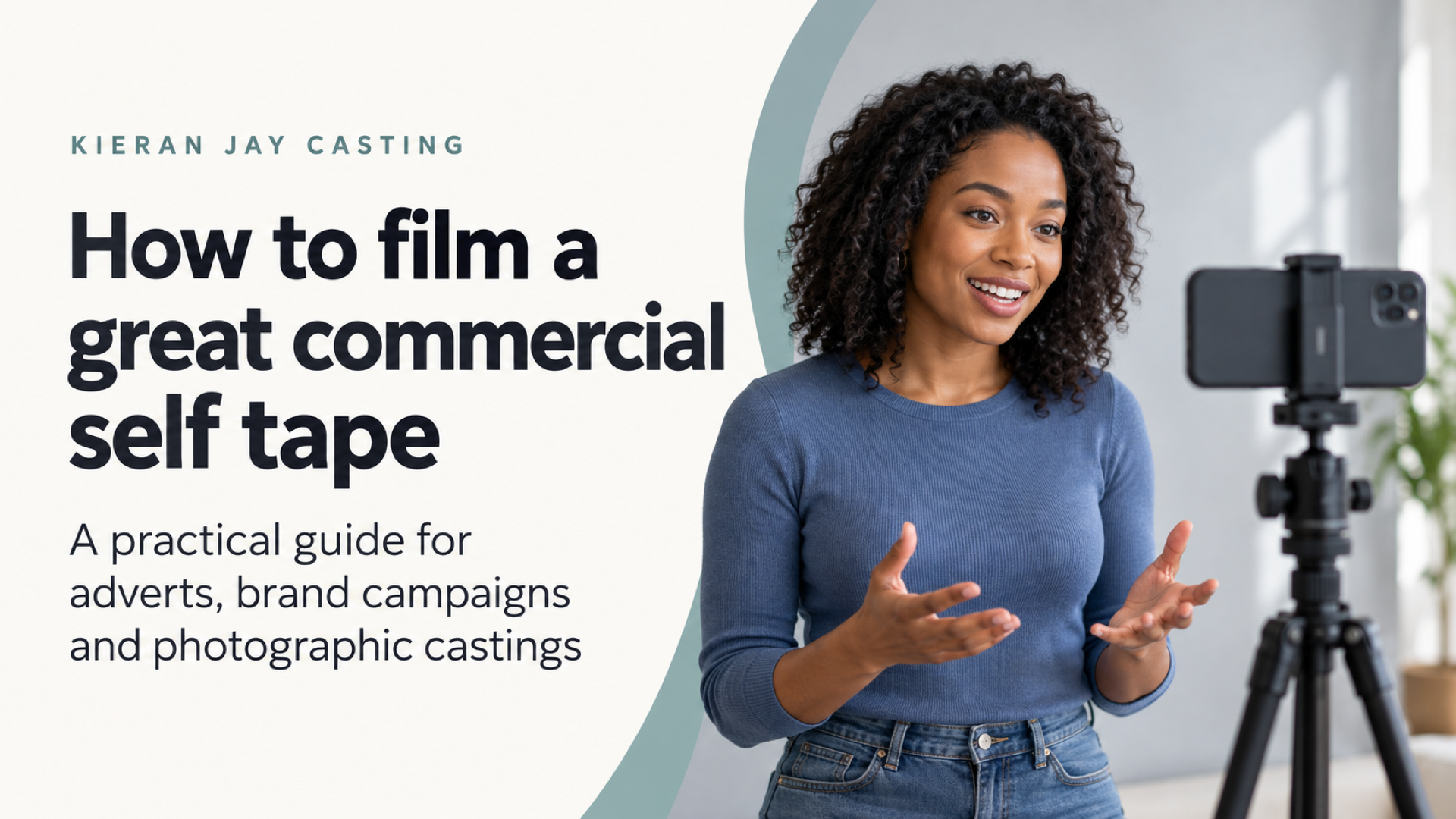
Check what is needed. Read the script, watch any examples and list the requested clips and photographs. Check clothing guidance, shoot dates, the deadline and how to submit.
Prepare for the task. You might be asked for dialogue, a reaction, product handling or movement. Follow the specific request.
Keep clothes simple. Choose something suitable for the role. Avoid distracting patterns and large logos unless requested.
2 Make yourself easy to see and hear
Your mobile phone is perfectly fine. You do not need an expensive camera or a studio. A clear picture and audible voice are what matter.
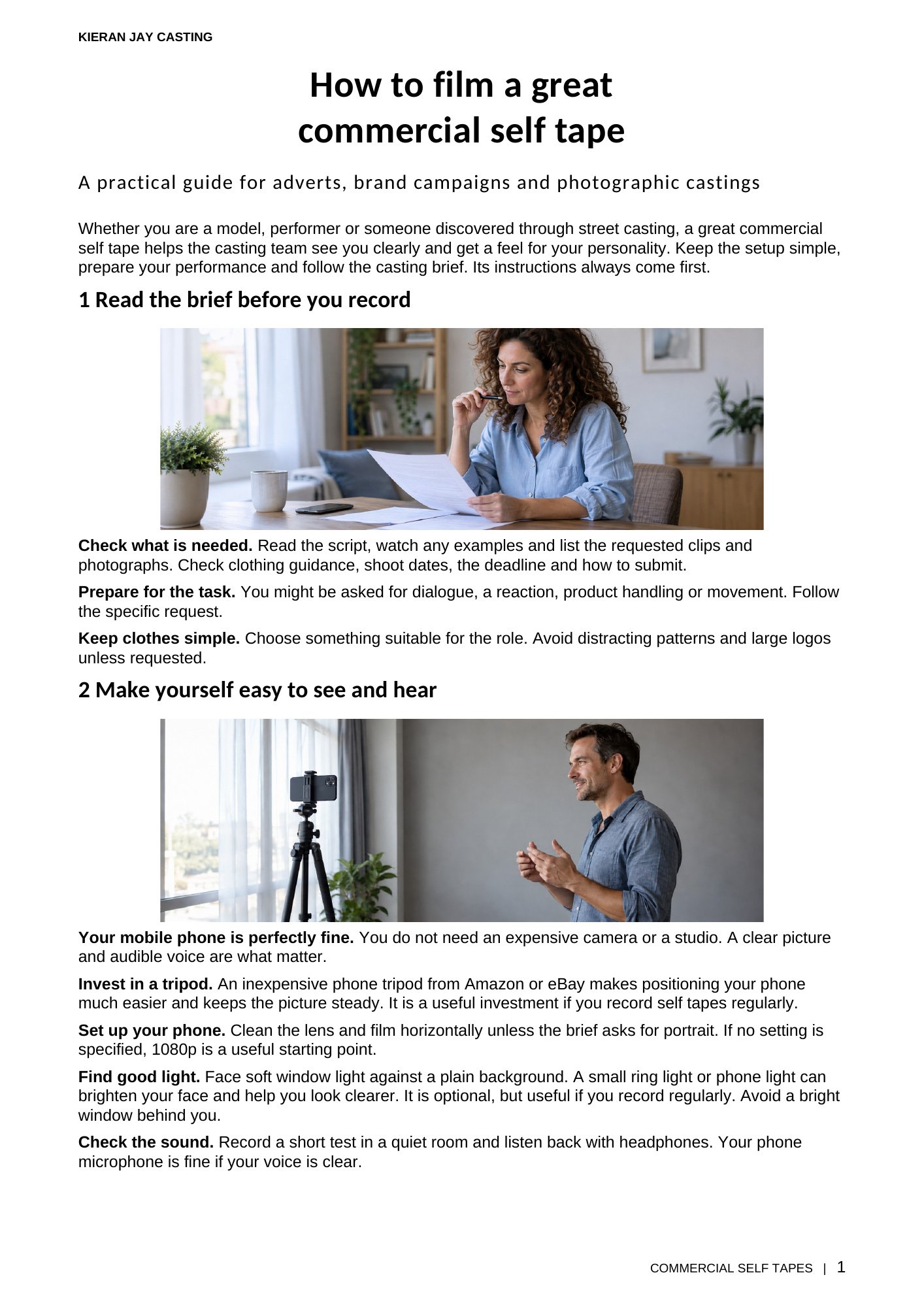
Invest in a tripod. An inexpensive phone tripod from Amazon or eBay makes positioning your phone much easier and keeps the picture steady. It is a useful investment if you record self tapes regularly.
Set up your phone. Clean the lens and film horizontally unless the brief asks for portrait. If no setting is specified, 1080p is a useful starting point.
Find good light. Face soft window light against a plain background. A small ring light or phone light can brighten your face and help you look clearer. It is optional, but useful if you record regularly. Avoid a bright window behind you.
Check the sound. Record a short test in a quiet room and listen back with headphones. Your phone microphone is fine if your voice is clear.
3 Frame the shot and introduce yourself
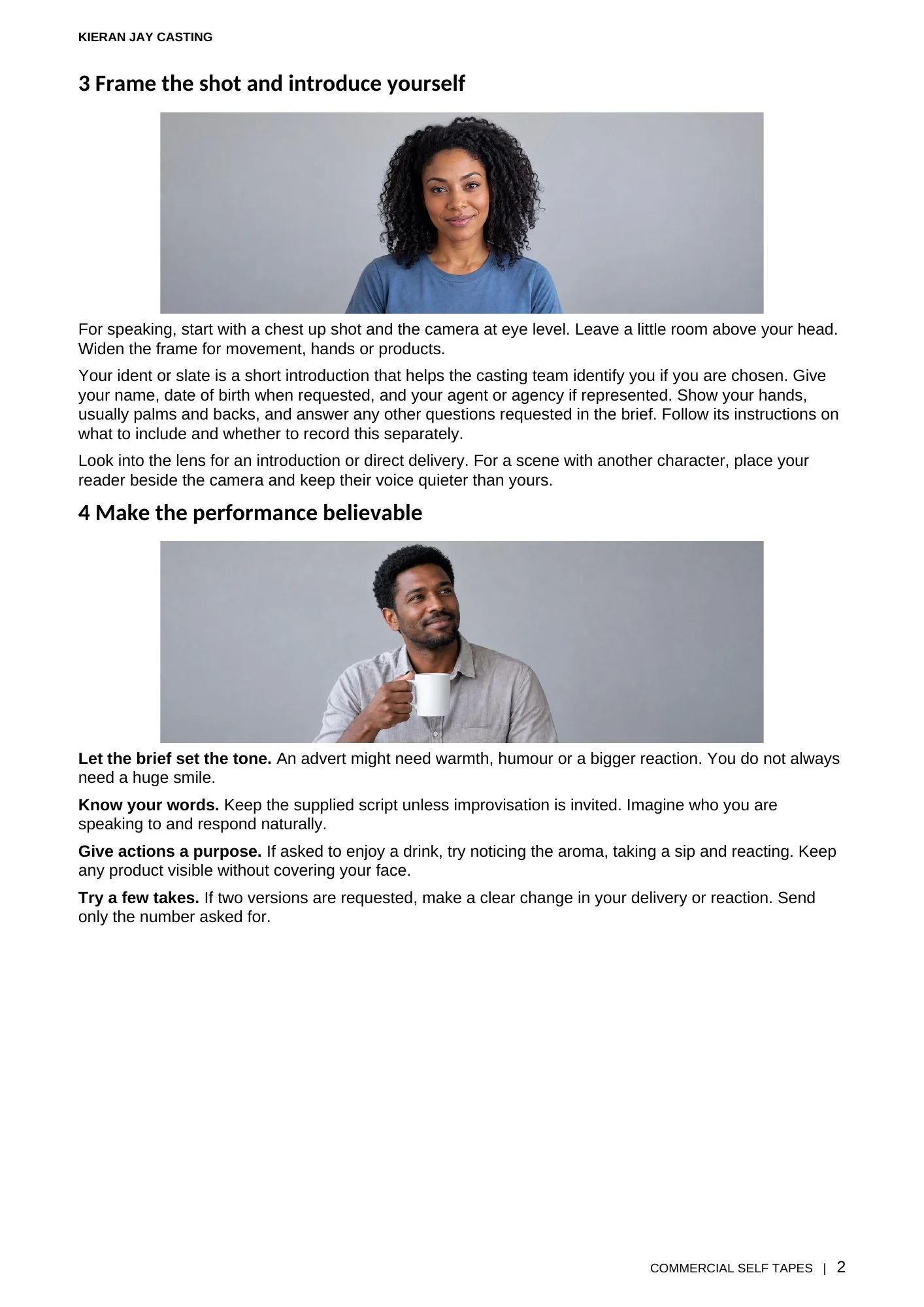
For speaking, start with a chest up shot and the camera at eye level. Leave a little room above your head. Widen the frame for movement, hands or products.
Your ident or slate is a short introduction that helps the casting team identify you if you are chosen. Give your name, date of birth when requested, and your agent or agency if represented. Show your hands, usually palms and backs, and answer any other questions requested in the brief. Follow its instructions on what to include and whether to record this separately.
Look into the lens for an introduction or direct delivery. For a scene with another character, place your reader beside the camera and keep their voice quieter than yours.
4 Make the performance believable
Let the brief set the tone. An advert might need warmth, humour or a bigger reaction. You do not always need a huge smile.
Know your words. Keep the supplied script unless improvisation is invited. Imagine who you are speaking to and respond naturally.
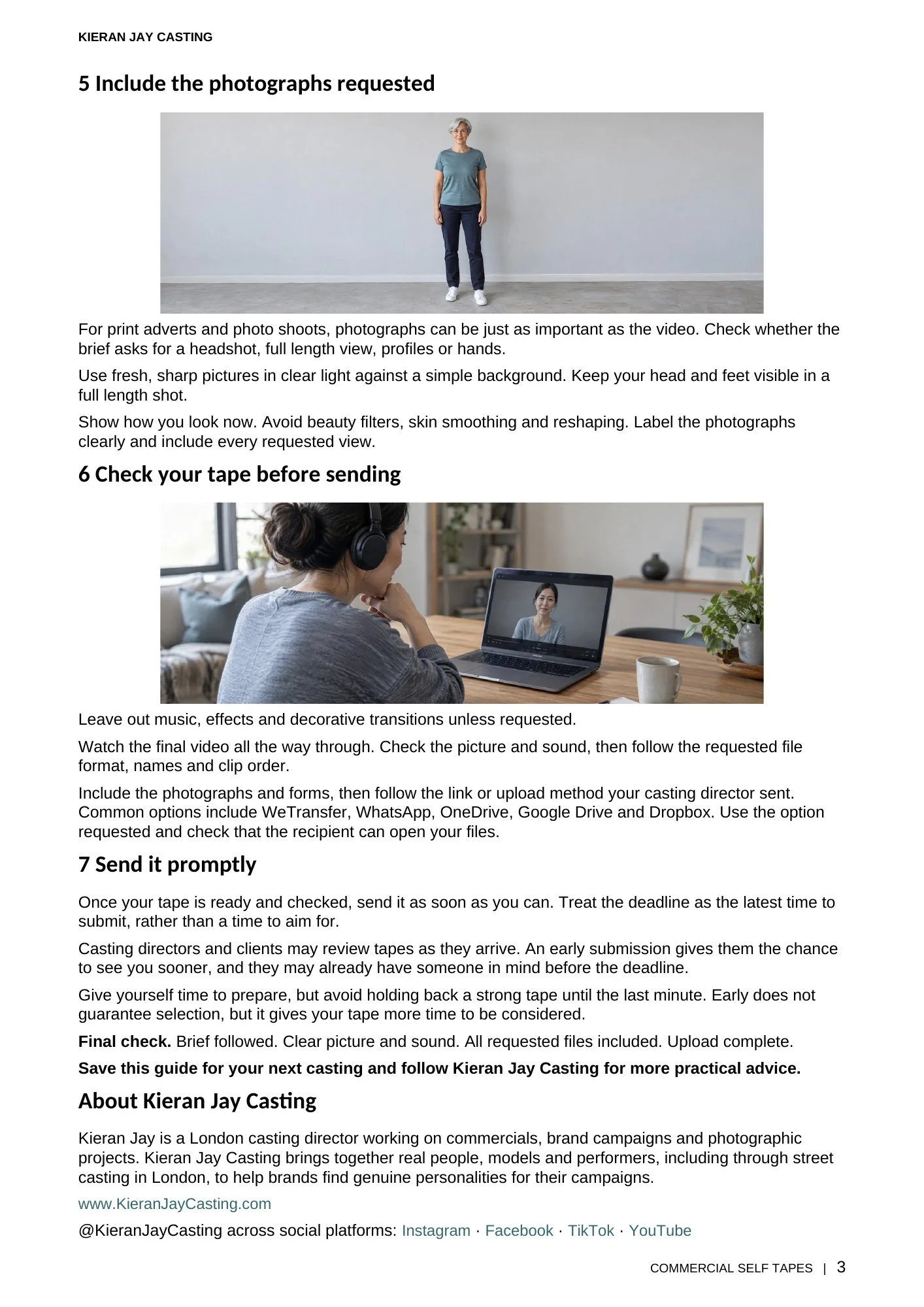
Give actions a purpose. If asked to enjoy a drink, try noticing the aroma, taking a sip and reacting. Keep any product visible without covering your face.
Try a few takes. If two versions are requested, make a clear change in your delivery or reaction. Send only the number asked for.
5 Include the photographs requested
For print adverts and photo shoots, photographs can be just as important as the video. Check whether the brief asks for a headshot, full length view, profiles or hands.
Use fresh, sharp pictures in clear light against a simple background. Keep your head and feet visible in a full length shot.
Show how you look now. Avoid beauty filters, skin smoothing and reshaping. Label the photographs clearly and include every requested view.
6 Check your tape before sending
Leave out music, effects and decorative transitions unless requested.
Watch the final video all the way through. Check the picture and sound, then follow the requested file format, names and clip order.
Include the photographs and forms, then follow the link or upload method your casting director sent. Common options include WeTransfer, WhatsApp, OneDrive, Google Drive and Dropbox. Use the option requested and check that the recipient can open your files.
7 Send it promptly
Once your tape is ready and checked, send it as soon as you can. Treat the deadline as the latest time to submit, rather than a time to aim for.
Casting directors and clients may review tapes as they arrive. An early submission gives them the chance to see you sooner, and they may already have someone in mind before the deadline.
Give yourself time to prepare, but avoid holding back a strong tape until the last minute. Early does not guarantee selection, but it gives your tape more time to be considered.
Final check. Brief followed. Clear picture and sound. All requested files included. Upload complete.
Save this guide for your next casting and follow Kieran Jay Casting for more practical advice.
About Kieran Jay Casting
Kieran Jay is a London casting director working on commercials, brand campaigns and photographic projects. Kieran Jay Casting brings together real people, models and performers, including through street casting in London, to help brands find genuine personalities for their campaigns.
@KieranJayCasting across social platforms: Instagram · Facebook · TikTok · YouTube